Cox says pilots relied on backup links during FAA ground stop
Former pilot John Cox explains how air traffic controllers managed flights in the sky while the nationwide halt remained in effect earlier today.
By Layla Haddad ·
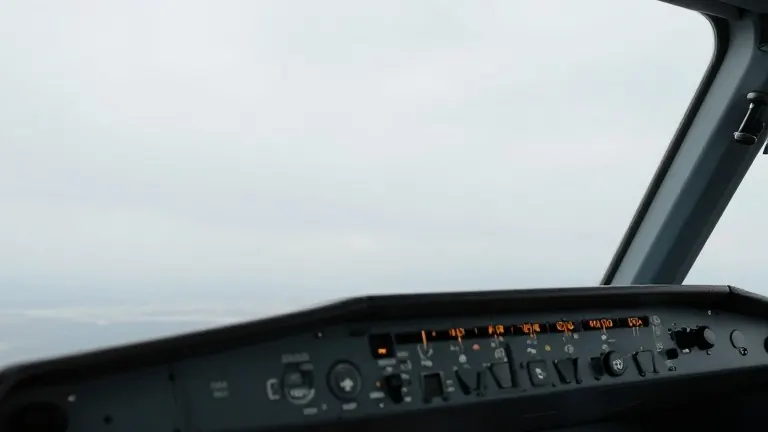
Former commercial airline pilot and aviation safety expert John Cox described the operational procedures used by pilots and air traffic controllers during the nationwide ground stop that was in effect earlier on November 13. Cox spoke with NPR host Scott Detrow after the Federal Aviation Administration lifted the restriction, detailing how aircraft already in the air managed the sudden operational shift.
Cox noted that pilots would first seek alternative communication channels when primary systems were affected. He identified backup radio frequencies and data link capabilities through ACARS and CPDLC systems as the primary tools for maintaining contact with controllers. These redundant systems allow pilots to receive necessary routing information even when standard communication channels are congested or unavailable.
Regarding the fate of airborne aircraft, Cox confirmed that officials instructed planes en route to continue toward their original destinations. He added that later amendments allowed for airborne holding patterns, particularly at major congested airports. Cox pointed out that physical ground space at hubs like O'Hare and Reagan National became a limiting factor, potentially leading to diversions, though the primary concern was not security but the capacity to land large numbers of aircraft safely.
Cox explained that the investigation will focus on finding commonalities between the en route traffic control centers involved. He stated that the system is designed to prevent single-point failures, so investigators must determine how a problem cascaded from one center to another. He suggested that authorities will look for shared infrastructure, such as fiber optic cable routes, and review whether any new systems were recently implemented that could have contributed to the issue.
For passengers, Cox said he would explain that the crew is following established contingency procedures to ensure safe separation from other aircraft. He emphasized that the flight would proceed more slowly and that delays would continue upon arrival. He would ask passengers to remain patient and trust the designed procedures of the air traffic control system.
Cox listed three primary questions for the FAA: identifying the common factor in the failure, reviewing the decision-making process of the FAA command center, and determining how to restore the system to full function. He noted that understanding the origin of the proliferation of issues is the first step in the review.