FAA Ends Rare Nationwide Flight Halt After Communications Failure
The third such event in modern history followed a global Microsoft outage, with officials ruling out a security threat.
By Jessica Morgan ·
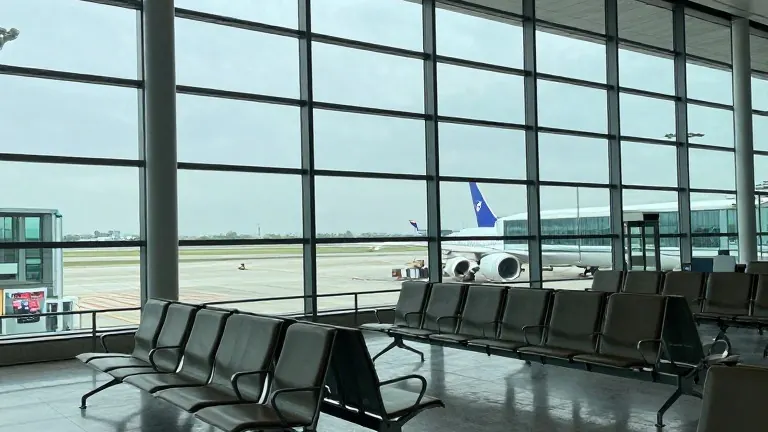
Passengers across the United States experienced flight delays and cancellations Friday after the Federal Aviation Administration ordered a nationwide ground stop. The halt suspended all commercial flights for a period before being lifted late in the day, marking the third time such a measure has been taken in recent memory.
Homeland Security Secretary Markwayne Mullin stated that the event was a telecommunications outage rather than an attack. He described the incident as coincidental with a massive global Microsoft outage that occurred the previous day and disrupted communication services worldwide. Mullin said there was no indication of nefarious activity targeting the U.S. aviation sector.
Reed Yadon, an aviation expert, noted that the last similar nationwide stop occurred in January 2023 due to a computer system malfunction. Before that, the previous instance was the shutdown following the September 11, 2001, attacks. Yadon explained that while the causes differ, the operational result is identical: aircraft must land to allow the system to recover before traffic resumes.
The FAA is currently in the middle of a $12.5 billion modernization effort designed to replace aging radar, copper wiring, and obsolete equipment by 2028. The agency reports that 68 percent of the old copper telecommunications network has already been swapped for fiber optic cables. However, Yadon warned that the system remains vulnerable to specific points of failure.
According to Yadon, the network now relies heavily on fiber connections between major centers. He cautioned that if a few main hubs are taken out, the entire system can collapse. This fragility persists despite the ongoing upgrade work and the shift away from legacy copper infrastructure.
Regional restrictions are more common than nationwide stops, often caused by staffing shortages, weather, or local equipment issues. For example, a controller shortage led to slowed flights into Harry Reid International Airport in Las Vegas earlier this summer. Friday’s event was distinct because the communications failure affected air traffic control centers across the country simultaneously.