120 Seats: Israel's Election Likely to End in Deadlock
Polls indicate neither the Netanyahu bloc nor the opposition will secure a majority, forcing complex negotiations or a repeat vote.
By Benjamin Clark ·
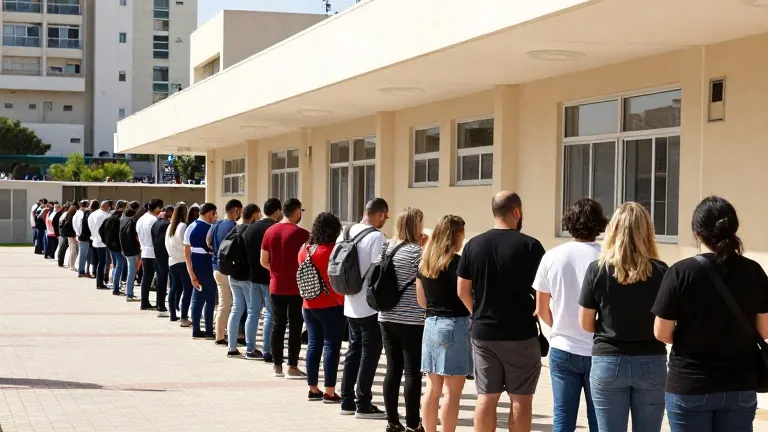
Israelis cast ballots on Tuesday in a parliamentary race that polls suggest will leave neither side with a decisive majority.
The Knesset holds 120 seats, and current polling data indicates that the right-wing bloc led by Prime Minister Benjamin Netanyahu and the opposing "change bloc" will both fall short of the 61 seats required to govern alone. This lack of a clear winner creates an immediate structural problem for forming a new government. Yohanan Plesner, president of the Israel Democracy Institute, stated that an indecisive outcome is the most probable result of the vote.
The campaign has been defined by two distinct strategies regarding the ongoing multi-front war. Netanyahu argues that only he can form a stable coalition without the support of Arab parties and that he needs more time to finish military operations in Gaza, Lebanon, and against Iran. His coalition relies on ultranationalist and religious partners. In contrast, the change bloc, a diverse group including Arab, left, and center parties, unites on the goal of removing Netanyahu from power. Their leading figure is former military chief Gadi Eisenkot of the Yashar party, who promises a state inquiry into the October 7, 2023, intelligence failures.
Voter turnout remains a critical variable that polls cannot predict with precision. Arab Israelis, who make up about 20% of the population, have historically shown fluctuating enthusiasm for voting. Plesner noted that higher Arab turnout reduces the likelihood of Netanyahu forming his preferred coalition. Jehad Abomoch, a cafe owner in the Arab city of Baqa al Gharbiya, said many in his community see a vote for the opposition as a way to end four years of social and military conflict. Additionally, two new parties focused on mandating ultra-Orthodox military service are hovering near the threshold for entry into the Knesset, potentially tipping the balance of power.
If no bloc secures a majority, the path to a new government becomes uncertain. Israeli political history offers several precedents for this scenario, including the five elections held between 2019 and 2022 due to deadlock. Parties may attempt to form a minority government if they win a plurality of seats, relying on abstentions from the other side to pass a confidence vote. Alternatively, individual lawmakers might switch sides to form a majority, a practice with precedent in Israeli politics. If negotiations fail, the country will face a new round of elections. Plesner said most politicians are not interested in a repeat vote, but he acknowledged that if candidates stick to their promises, the country may be forced to return to the polls.
Source: CBS News